Along the sandy fringes of the Maldives’ palm-lined beaches and inside the forests of Maldivian islands, there stands a tree both humble and remarkable — Midhili gas, the tropical almond tree (Terminalia catappa). To the casual observer, its broad tiers of branches and lush leaves offer shade and seaside beauty. But to generations of Maldivians, this tree has been far more than scenery. From edible seeds to wood for craftwork, and shade provider, Midhili has woven itself into daily life and island culture.
Meet the Tree: Midhili (Terminalia catappa)
The tropical almond tree — which Maldivians call
Midhili-Guss — is a majestic, broad-canopied species native to tropical coastlines across Asia, Africa, and parts of the Pacific. Its scientific name,
Terminalia catappa, places it in the leadwood family Combretaceae, a group known for hardy, fast-growing trees well suited to warm climates. (
Wikipedia)
Appearance & Structure
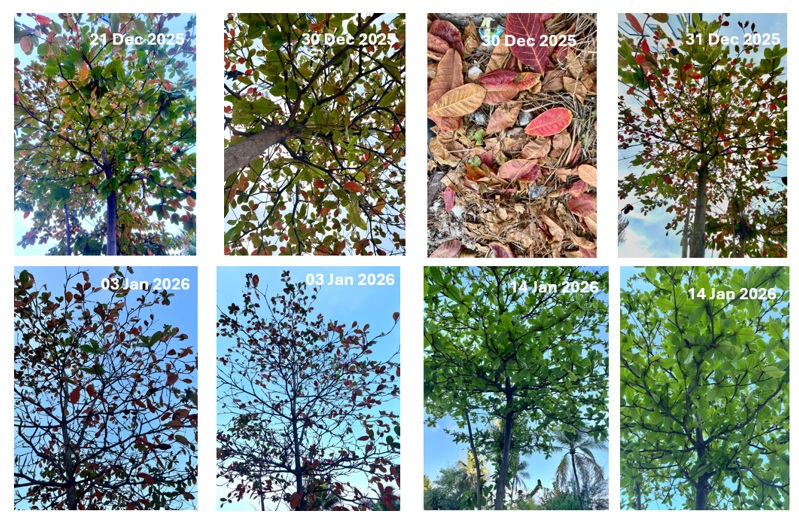
Midhili grows tall — often reaching 10 to 25 m in height — with a straight trunk and a layered branch structure that can resemble a pagoda. Young branches typically grow in distinct horizontal tiers that form rounded, umbrella-like canopies. The large, glossy leaves (15–36 cm long) are striking and noticeable: they turn brilliant shades of red, orange and yellow before falling, offering a colorful seasonal spectacle not often seen in other tropical evergreens. (
FAOHome)
Fruit & Seeds
The tree produces oblong drupes (in Dhivehi known as midhili gobu) — often green to yellow or reddish when ripe — each containing a hard seed inside.
This seed is what Maldivians call
Kanamadhu. Though encased in a fibrous husk, the seed itself is edible with a lightly sweet, nutty flavor and is celebrated as a local culinary treasure. (
GreenHavenKW)
Growing Conditions: Why Midhili Thrives in the Maldives
The Maldives’ unique geography — a nation of coral islands set in the warm Indian Ocean — offers near-perfect conditions for Midhili trees:
Tropical Climate
Midhili flourishes in tropical, frost-free regions with abundant sunlight and warm air throughout the year. Rainfall is welcome but not essential — the species tolerates drought well. (
Scribd)
Coastal Resilience
The tree is highly tolerant of salty winds and sandy soils, conditions common on Maldivian coastlines. Its robust root system helps stabilize soil and protect shorelines from storm surges, contributing to natural coastal defense — a notable benefit for low-lying island communities. (
Scribd)
Low Maintenance
Once established,
Midhili requires minimal care. It resists salt spray, wind stress, and water fluctuation — making it a go-to choice for shade, shelter and ecological balance on islands where space and resources are precious. (
GreenHavenKW)
The Seasons of Midhili
Unlike many evergreen tropical trees, Midhili has a distinct seasonal rhythm:
Leafing & Flowering
In certain cycles, Midhili sheds its leaves, which then regrow in vibrant new colors. This makes the tree visually dynamic and is one of the few seasonal signals in tropical island landscapes.
Fruit Drop
Once fruits mature, they fall naturally to the ground. In the Maldives, this seasonal bounty becomes a practical harvest: women and families collect fallen drupes (midhili gobu) during peak dropping periods for processing into Kanamadhu.
Unlike cultivated nuts like almonds or cashews (which have intensive commercial systems), tropical almonds are predominantly wild-collected — adding to their rustic charm and connection to community tradition.
Kanamadhu: The Beloved Seed
At the heart of
Midhili’s cultural value lies
Kanamadhu — the seed inside the tropical almond’s fruit. This seed is a cherished local ingredient, known for its sweet, almond-like flavor and versatility. (
Lonumedhu)
Foraging & Preparation
Many women on inhabited islands make seasonal foraging walks through wooded areas, picking up
midhili gobu that has fallen naturally to the ground. These fruits are sun-dried to reduce moisture and then manually cracked open — often with machetes or knives — to free the
Kanamadhu. (
Lonumedhu)
Culinary Uses
Once dried and shelled, Kanamadhu is:
- Eaten as a snack, raw or roasted.
- Ground into flours and used in traditional sweets.
- Incorporated into baked goods like Kanamadhu Cake, a classic Maldivian treat served at tea time or celebrations and a beloved local specialty. (Delicious Recipes)
- A flavorful inclusion in both sweet and savory dishes, such as gulha (snacks), metaa gandu and more, enhancing texture and flavor in local cuisine. (Lonumedhu)
Chefs in high-end resorts are even highlighting
Kanamadhu on menus — from adventurous reinterpretations of desserts to unique dressings in upscale fusion dishes. (
theforksandspoons.com.hk)
Wood & Craft Uses
While
Midhili’s wood isn’t traditionally as prized as coconut or breadfruit in Maldivian carpentry, it does serve in woodworking, tool
handles, and utilitarian crafting on some islands — especially where trees are plentiful. In other regions of the world, tropical almond timber is used for furniture and general purposes due to its durability and unique grain. (
Scribd)
Medicinal & Household Uses
Across tropical cultures, leaves, bark, and husks of
Terminalia catappa have been used in folk remedies. Leaves contain tannins and antioxidants, and are sometimes brewed in teas or applied in remedies for skin or digestive issues. (
fruitsinfo.com)
Interestingly,
Midhili leaves also find modern use in aquariums as natural water conditioners — releasing tannins that mirror natural stream environments for fish health. (
GreenHavenKW)
Ecological & Shade Benefits
Given the Maldives’ intense equatorial sun and limited land area,
Midhili’s broad canopy is valued for
natural shade — cooling public spaces, school yards, and community gathering places. It’s one reason tropical almonds are commonly planted around inhabited islands and gardens. (
GreenHavenKW)
Kanamadhu & Income: What Do Locals Gain?
Cultural value aside, Kanamadhu has commercial worth — though precise up-to-the-island statistics are hard to come by.
Globally, tropical almond seeds fetch value as specialty nuts. In general nut markets (including imported almonds in the Maldives) prices can range between USD 8–$14 per kg for raw almonds — which gives some context to the potential market value of locally sourced nuts like
Kanamadhu. (
Tridge)
Reports from environmental and local food culture blogs also note that
Kanamadhu kernels — sold in local markets — hold
significant commercial value, largely due to demand in traditional dishes and growing interest from chefs and craft food producers. (
environment.baros.com)
For many women on smaller islands, foraging for Kanamadhu can supplement household income or provide barter goods during festival seasons or market days. While not an industrial crop, its value is meaningful at community and household levels.
Why Midhili Matters: Cultural, Ecological, Economic
The tropical almond tree thrives where others struggle — on salty, sandy soils with strong sea breeze and minimal care. Its bounty falls to the ground with seasonal grace, turning nature’s generosity into community tradition. Mothers and daughters remember walks to collect midhili gobu. Grandparents recall roasting Kanamadhu beside open fires. Local cafes and bakers keep the legacy alive by reinventing kanamadhu sweets for new generations.
In the Maldives — where land is precious and ecosystems are fragile — Midhili offers shade and shelter, nutrition and flavor in local dishes, seasonal livelihood and income as well as ecological resilience on exposed coasts.