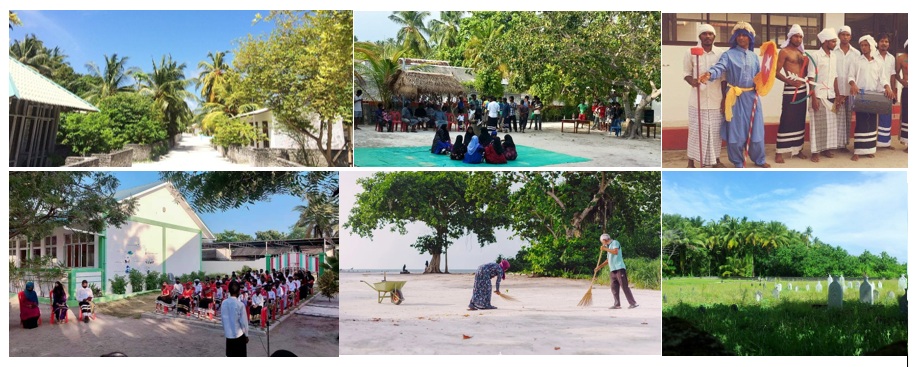
Hirimaradhoo: An Island being Evacuated
a
Admin
January 1, 2026 · 5 min read
In the far north of the Maldives, Hirimaradhoo faces the planned relocation of its entire community—an act that marks not just administrative change, but the end of daily life on a lived island. While relocation to a larger island promises better services and opportunity, it also raises deeper questions about loss, identity, heritage, and what becomes of islands once their people are gone.
In the far north of the Maldives, beyond the runways and resorts that dominate postcard images of the country, lies Hirimaradhoo; an island that has quietly sustained a small community for generations.
Soon, it will no longer be inhabited by Maldivians.
The planned relocation of Hirimaradhoo’s residents marks more than an administrative decision or a logistical exercise. It represents the end of daily life on an island that has carried memory, labour, faith, and identity in its soil. While the move promises better access to services and opportunities, it also raises difficult questions: what is lost when an island is emptied, and what, if anything, replaces it?
The Loss
For the people of Hirimaradhoo, the loss is not simply land—it is place.
Small islands and the communities they hold foster a form of intimacy that cannot be replicated elsewhere. Everyone knows the paths, the trees, even the currents in the lagoon. Children grow up under the same shade their grandparents once rested beneath. Mosques, wells, homes, and burial grounds anchor families to centuries of shared presence.
Hirimaradhoo’s scenic harbor front, it’s over 400 year old historic mosque, it’s protected trees, it’s farming plots, and it’s surrounding reefs are not interchangeable assets. They are lived spaces. When residents move, these places remain; but without the people who gave them meaning.
There is also the loss of autonomy. A small island may struggle with services, but it allows its people a degree of self-determination. Life moves at a human scale. Decisions are discussed face-to-face. Relocation to a larger island inevitably brings anonymity, competition, and dependence on centralized systems.
Finally, there is the emotional cost. Leaving an island is not like moving between neighborhoods. It is closer to migration, even exile. The knowledge that one’s birthplace will no longer be lived in; no lights at night, no call to prayer, no boats pulled onto the shore; creates a quiet grief that policy documents rarely acknowledge.
Gains, Maybe
Yet it would be dishonest to speak only of loss.
The reality of life on a very small island in modern Maldives is increasingly difficult. Limited healthcare, shrinking schools, reduced transport, and a declining population place heavy burdens on those who remain. For young people especially, tend to think that opportunity and success are commensurate to settling in the capital Male’ region or in islands with bigger populations. The Maldivian Government decided that the community of 400-500 people living on Hirimaradhoo would be moved to Hanimaadhoo, a bigger populated island in the same atoll.
Relocation to a larger island like Hanimaadhoo is deemed to offer tangible gains:
- Better access to hospitals and education
- More reliable transport links
- Expanded employment options
- Improved housing and infrastructure
For some families, this move may bring relief; less isolation, fewer sacrifices, and a future that feels less constrained by geography. Children may grow up with broader choices than their parents had. Elders may receive healthcare that was once out of reach. Some may therefore justify that the move from Hirimaradhoo to Hanimaadhoo is not an end per se’, but a pragmatic adaptation to demographic and economic realities.
A Maldivian Island without Maldivians
The question lingers: what becomes of Hirimaradhoo once the last family leaves?
An island can be abandoned physically, but it should not be abandoned historically.
In the Maldives, abandoned islands rarely remain untouched for long in recent times. Given its natural beauty, lagoon, and reef systems, it is likely that Hirimaradhoo will eventually be offered for lease; perhaps as a resort, a guesthouse island, or a real estate development.
If that happens, the island may be reborn under a new identity: landscaped, rebranded, marketed. Paths may become boardwalks. Homes may be replaced by villas. The lagoon that once fed fishermen may serve tourists instead. This transformation raises an uncomfortable paradox. The island may become economically “valuable” only after it is emptied of the people who sustained it without profit. There is also the risk of erasure. Without safeguards, cultural sites may decay or be removed. Place names may disappear. The story of Hirimaradhoo as a living community could be reduced to a footnote; or a decorative plaque.
Questions on Legacy
Hirimaradhoo’s story is not unique. Across the Maldives, small islands face the same crossroads. Policy makers seem oblivious to balancing efficiency & sustainability with heritage, identity and belonging.
Here are some important questions that require informed national debate and dialogue.
- Is relocation necessary?
- Is evacuation inevitable?
- How will Hirimaradhoo be preserved in living memory?
- Will former residents retain rights, access, or recognition?
- Will cultural landmarks be protected?
- Will future developments acknowledge the island’s past—or overwrite it entirely?
- What about intergenerational justice when a land and its resources are sold or locked for decades to come?
When the boats stop arriving and the houses fall quiet, Hirimaradhoo will still exist; ringed by reef, shaped by monsoon, grounded in centuries of human presence. Whether it becomes a resort, a guesthouse, or remains temporarily untouched, its story deserves to be told honestly.
Its community should be rightly compensated, and in fact, it’s future generations should be granted the right to return in case they wish to do so in a time to come.
Note: For more beautiful images of the island and to understand the Hirimadhoo way of life, please visit https://zuvaanmasveriya.com/hdh-hirimaradhoo-image-gallery/
https://malamathi.org/islands/20
Tags
Island Relocation
Cultural Heritage
Community Displacement
Hirimaradhoo
Hirimaradhoo Mangrove
South Thiladhunmathi
Recent Posts
ޖަމާޢަތުގެ އިޤްތިސާދީ ތަރައްޤީއަށް މަގުދައްކައިދޭ ފޮތުގެ ޑިޖ...
Jul 27, 2026 · 1 min read
Small Gardens. Stronger Islands..
Jul 27, 2026 · 3 min read
What Really Built the Maldives?
May 26, 2026 · 6 min read
Malé at Breaking Point
Mar 7, 2026 · 5 min read
Midhili - The Tropical Almond Trees of Maldives
Feb 3, 2026 · 6 min read